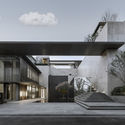
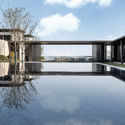
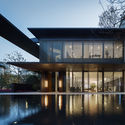
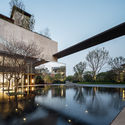
Urban development in China has been a contentious issue, represented by megacities and endless gated communities, remnants of the country’s large communal working and living units, the ‘danwei’. However, in recent years, the paradigm has been shifted largely by developers for more innovative living concepts, the practice of designing inclusive communities anchored by public and cultural buildings serving the wider community. One of the earliest experiments, Liangzhu New Town by Vanke is now a benchmark for creating diverse community.
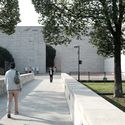
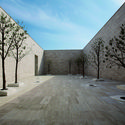
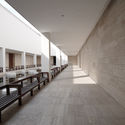
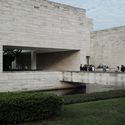
Liangzhu New Town is located in the Northwestern suburbs of Hangzhou, a megacity in Eastern China. Initiated in 2000 by Vanke, China’s biggest real estate developer, Liangzhu New Town was driven by Ebenezer Howard ‘garden city’ concept to blend traditional Chinese country living with urbanised lifestyles. Situated in what is now the Northwestern suburbs of Hangzhou, Liangzhu was still recently the countryside and a World Heritage site with over 5000 years of history, a late neolithic site of rice cultivation in ancient China. Aside from its historical background, Liangzhu is also abundant in natural resources, surrounded by 25 mountains, 5 lakes and 1 river, creating a unique rural setting and development possibilities for tourism, leisure and living. The entire masterplan covers an area of approximately 16500 acres.








.jpg?1603801323 "Anchoring New Urban Development through Public Architecture and Local Identity: Liangzhu New Town")
.jpg?1603800839 "Anchoring New Urban Development through Public Architecture and Local Identity: Liangzhu New Town")
.jpg?1603800223 "Anchoring New Urban Development through Public Architecture and Local Identity: Liangzhu New Town")
.jpg?1603800998 "Anchoring New Urban Development through Public Architecture and Local Identity: Liangzhu New Town")
.jpg?1603800356 "Anchoring New Urban Development through Public Architecture and Local Identity: Liangzhu New Town")
.jpg?1603800252 "Anchoring New Urban Development through Public Architecture and Local Identity: Liangzhu New Town")
.jpg?1603800645 "Anchoring New Urban Development through Public Architecture and Local Identity: Liangzhu New Town")
_%E8%B0%83%E6%95%B4%E5%A4%A7%E5%B0%8F.jpg?1603801863 "Anchoring New Urban Development through Public Architecture and Local Identity: Liangzhu New Town")
_%E8%B0%83%E6%95%B4%E5%A4%A7%E5%B0%8F.jpg?1603801811 "Anchoring New Urban Development through Public Architecture and Local Identity: Liangzhu New Town")
_%E8%B0%83%E6%95%B4%E5%A4%A7%E5%B0%8F.jpg?1603801917 "Anchoring New Urban Development through Public Architecture and Local Identity: Liangzhu New Town")
_%E8%B0%83%E6%95%B4%E5%A4%A7%E5%B0%8F.jpg?1603801881 "Anchoring New Urban Development through Public Architecture and Local Identity: Liangzhu New Town")
_%E8%B0%83%E6%95%B4%E5%A4%A7%E5%B0%8F.jpg?1603801896 "Anchoring New Urban Development through Public Architecture and Local Identity: Liangzhu New Town")